

 Calibration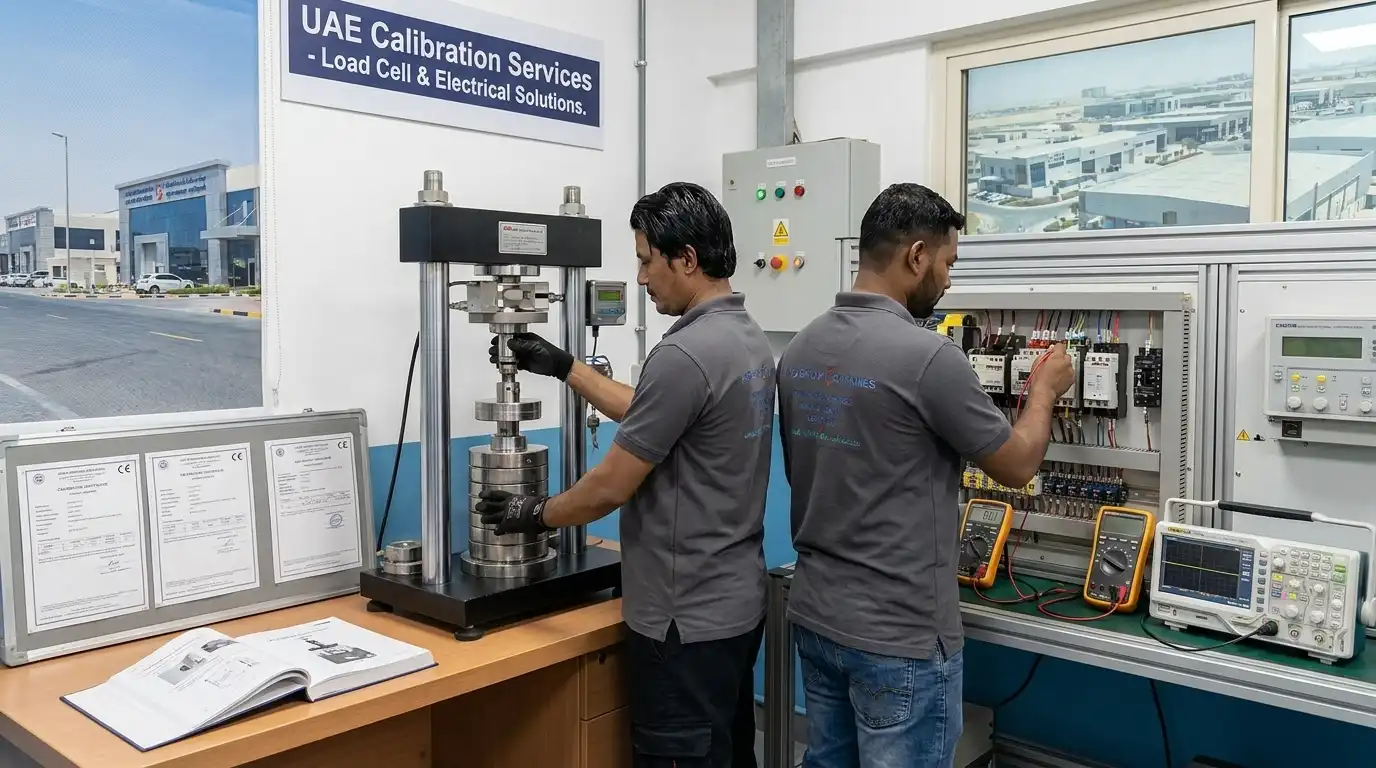
Key Takeaways
- Load cell accuracy is governed by OIML R60 classes, from D1 through C6. The class you need depends on the application, not a generic request for “high precision.”
- Electrical calibration covers a specific instrument list, multimeters, clamp meters, insulation testers, oscilloscopes, loop calibrators, not one blanket service.
- A calibration certificate only carries audit weight in the UAE when it’s issued under ISO/IEC 17025:2017 accreditation, for load cells and electrical instruments alike.
- Many industrial facilities need both disciplines under one contract: weighing and force systems alongside electrical test equipment, since both sit on the same annual audit calendar.
A facility running both a weighbridge and a bank of process instrumentation doesn’t have two separate calibration problems, it has one audit-readiness problem with two technical disciplines inside it. Load cell calibration and electrical calibration are governed by different standards and require different reference equipment, but industrial buyers usually need to source both at once. This guide covers what each discipline actually involves and what to check before signing a combined contract.
Why Industrial Buyers Often Need Both in the Same Contract
Weighbridges, batching systems, and process scales depend on load cells; the same facility typically runs multimeters, clamp meters, and process instrumentation that need electrical calibration on the same annual cycle. Bundling both disciplines under one accredited provider simplifies audit scheduling considerably, one calibration calendar instead of two, one accreditation to verify instead of two, and one point of contact when an auditor asks for traceability records.
Load Cell Calibration: What “Accuracy Class” Actually Means
Load cell accuracy is defined by OIML R60, the international recommendation published by the International Organization of Legal Metrology, which sets out accuracy classes from D1 through the C-series (C1 through C6). The class you need depends entirely on the application. Lower classes, D1 and the low-numbered C classes, suit bulk material weighing where high precision isn’t critical, sand, cement, aggregate. Higher classes, C3 through C6, are specified for applications where precision matters directly to the process: check-weighing, dosing systems, filling machines, and shop-counter scales.
Asking a provider for “the most accurate load cell calibration available” isn’t the useful question. The useful question is which OIML class your specific application requires, and whether the provider’s accreditation scope actually covers that class and your load cell’s capacity range. Our mass and balance calibration service covers individual load cell verification alongside scales and test weights, from milligram lab balances to multi-ton factory-floor systems.
Electrical Calibration: What’s Actually on the Scope List
“Electrical calibration” isn’t a single service, it’s a scope list, and the list matters more than the label. Standard coverage typically includes multimeters and clamp meters for voltage, current, and resistance measurement, insulation testers, oscilloscopes, power analyzers, and loop calibrators for process instrumentation signal verification. A provider’s accreditation certificate should list the specific parameters and ranges covered, not just state “electrical calibration” as a category.
In the UAE, electrical calibration compliance also intersects with standards enforced by the Emirates Authority for Standardization and Metrology (ESMA) and, for utility-connected equipment, Dubai Electricity and Water Authority (DEWA) requirements. Confirming a provider’s scope covers your specific instrument types, not just the general category, avoids a costly gap discovered mid-audit.
What Makes a Calibration Certificate Actually Defensible in an Audit
Accreditation is the difference between a calibration certificate that holds up in an audit and one that’s just paperwork. ISO/IEC 17025:2017 accreditation means an independent body has assessed a laboratory’s technical competence for a specific, listed scope of instruments and ranges, not a general claim of quality. Al Saqr Engineering holds EIAC accreditation (LB-CAL-056), covering both mechanical and electrical calibration disciplines under one scope. When evaluating any provider for a combined load cell and electrical calibration contract, ask to see the accreditation scope document itself, not just a logo, and confirm it explicitly lists both the load cell classes and the electrical instrument types you need covered.
Questions to Ask Before Signing a Combined Calibration Contract
Before committing to a provider for both disciplines, get clear answers on the following:
- Does the accreditation scope explicitly cover load cells at your required OIML class? A general mass calibration accreditation doesn’t automatically mean every OIML class is covered.
- Does the electrical scope list your specific instrument types? Multimeters and insulation testers require different reference standards than oscilloscopes or power analyzers.
- Is on-site calibration available for fixed equipment? Weighbridges and large scales generally can’t be shipped to a lab; confirm on-site capability before assuming it.
- What’s the realistic turnaround for both disciplines together? A combined contract should have one coordinated schedule, not two separately negotiated timelines.
- Will the certificate state measurement uncertainty explicitly? A certificate without a stated uncertainty value is harder to defend under audit scrutiny.
Ready to Combine Your Calibration Program?
Sourcing load cell and electrical calibration from one ISO/IEC 17025:2017-accredited provider simplifies your audit calendar without compromising on either discipline’s technical requirements.
View Electrical Calibration Services
Frequently Asked Questions
What OIML class do I need for my load cells?
It depends on your application. Bulk material weighing (sand, cement, aggregate) typically only needs a lower class like D1. Applications where precision affects the process directly, dosing, filling, check-weighing, need a higher class in the C3-C6 range.
What electrical instruments need regular calibration?
Common instruments include multimeters, clamp meters, insulation testers, oscilloscopes, power analyzers, and loop calibrators. The exact list depends on what your facility uses; confirm your provider’s accreditation scope covers each specific instrument type, not just “electrical calibration” as a category.
Does Al Saqr Engineering calibrate both load cells and electrical instruments?
Yes. Al Saqr Engineering holds EIAC accreditation (LB-CAL-056) covering both mechanical calibration, including load cells and weighing systems, and electrical calibration under one scope.
Why do I need ISO 17025 accreditation on both certificates?
ISO/IEC 17025:2017 accreditation is what makes a calibration certificate legally recognized and audit-defensible in the UAE. Without it, a certificate is documentation of a measurement, not proof of traceable, accredited competence.